
October 20, 2026 · Janice Reyes
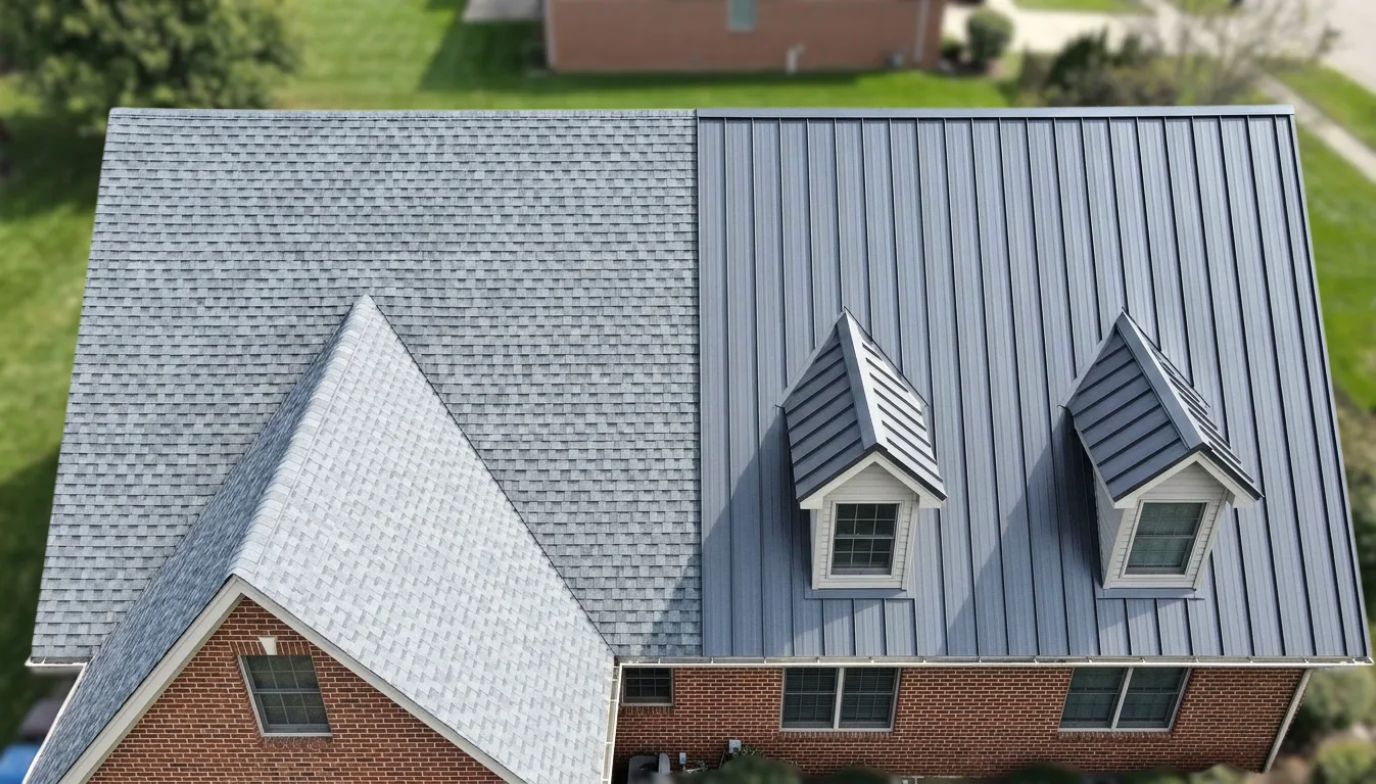
Metal Roof or Shingles: Which Is Better in the Mountains?
Short answer: For most Colorado mountain homes, a standing seam metal roof is the better long-term choice. Metal roofs last decades longer than asphalt shingles, shed heavy snow, resist wildfire embers and hold up well to high-altitude sun. Asphalt shingles cost less upfront and remain a smart choice for tighter budgets, lower-slope roofs and homes where sliding snow is a concern, especially when you choose impact-resistant architectural shingles.
Choosing between a metal roof and asphalt shingles is one of the biggest decisions you'll make for a mountain home. The right roof has to handle deep snow, ice dams, hail, wildfire risk, wind and intense UV, often all in the same year.
RMG Roofing & Metal installs both. We're a specialty metal roofing and fabrication company with our own metal shop in Glenwood Springs, and a GAF President's Club contractor for asphalt shingle systems. That means we can give you an honest comparison of metal roof vs. shingles cost, lifespan and performance in the Roaring Fork Valley.
Metal Roof vs. Asphalt Shingles: Side-by-Side Comparison
|
Factor |
Standing seam metal roof |
Asphalt shingles |
|---|---|---|
|
Typical lifespan |
Often 40 to 70 years |
Often 15 to 30 years; shorter at high altitude |
|
Upfront cost |
Higher, often two to three times shingles |
Lower |
|
Long-term value |
Fewer replacements over the life of the home |
May need replacing two or more times |
|
Snow shedding |
Excellent; snow slides off (snow guards recommended) |
Holds snow on the roof longer |
|
Ice dam resistance |
Better; less snow sits on the roof to melt and refreeze |
More prone to ice dam leaks |
|
Hail resistance |
Strong; heavier gauges resist damage, may show cosmetic dents |
Varies; Class 4 impact-resistant shingles perform best |
|
Fire rating |
Class A (as part of a rated roof assembly) |
Many architectural shingles are Class A |
|
Wind resistance |
Very high with concealed fasteners |
Good with proper nailing and high-wind ratings |
|
UV and freeze-thaw |
Kynar 500 finishes resist fading; metal doesn't crack |
Sun and freeze-thaw cause granule loss and cracking |
|
Maintenance |
Low; check fasteners, sealants and snow guards |
Moderate; replace damaged shingles, watch granule loss |
|
Weight |
Lightweight |
Heavier per square |
|
Look |
Modern or rustic; many colors and profiles |
Classic look; many colors and dimensional styles |
|
Noise |
Quiet with solid decking and underlayment |
Quiet |
The right answer depends on your budget, roof design, how long you plan to stay, and what's below your roof edge.
Metal Roofing: Pros, Cons and Types
Pros of a metal roof in the mountains:
- Longevity. A quality standing seam metal roof can last two to three times longer than asphalt shingles.
- Snow shedding. Smooth panels release snow, reducing roof snow load and ice dams.
- Fire resistance. Metal is noncombustible and a strong choice for homes in the wildland-urban interface.
- Durability. Metal won't crack, curl or lose granules in freeze-thaw cycles.
- Low maintenance. No shingles to blow off and fewer repairs over time.
- Design flexibility. Panels come in many profiles and Kynar 500 colors, plus copper and zinc for high-end homes.
Cons of a metal roof:
- Higher upfront cost than asphalt shingles
- Sliding snow can damage gutters, decks and vehicles without snow guards
- Large hail can leave cosmetic dents on lighter gauges
- Requires an experienced metal roofing installer and properly fabricated flashing
Types of Metal Roofing
- Standing seam metal roofing. Raised seams with concealed fasteners. The premium choice for mountain homes because there are no exposed screws to loosen or leak.
- Exposed-fastener metal roofing. Panels screwed through the face. Lower cost and common on barns, cabins and outbuildings, but fasteners need periodic maintenance.
- Stone-coated steel roofing. Steel panels with a stone-chip finish that looks like shingles, shakes or tile. Offers metal's durability with a traditional look and strong hail resistance.
RMG fabricates standing seam panels, flashing and trim in our Glenwood Springs shop. Learn more on our metal roofing page and our stone-coated steel page.
Asphalt Shingles: Pros, Cons and Types
Pros of asphalt shingles:
- Lower upfront cost. Shingles are the most affordable roof replacement option.
- Holds snow in place. The textured surface grips snow, so less snow slides onto decks, walkways and gutters.
- Familiar look. Architectural shingles fit traditional and mountain-style homes and come in many colors.
- Easy repairs. Individual damaged shingles can be replaced.
- Impact-resistant options. Class 4 shingles are designed to stand up better to hail.
Cons of asphalt shingles:
- Shorter lifespan, especially under intense high-altitude UV
- Granule loss, cracking and curling from freeze-thaw cycles
- More vulnerable to ice dam leaks because snow stays on the roof longer
- Can blow off in high winds if not properly installed
Types of Asphalt Shingles
- Architectural (dimensional) shingles. Thicker, layered shingles with better wind ratings and a richer look. The standard for most roof replacements.
- Class 4 impact-resistant shingles. Built to resist hail damage. Some insurers offer premium discounts for them, so ask your carrier.
- Designer shingles. Premium styles that mimic slate or wood shake.
A complete shingle roofing system, with ice and water shield at the eaves and valleys, synthetic underlayment, proper ventilation and matching ridge caps, matters as much as the shingle itself. As a GAF President's Club contractor, RMG installs full GAF roofing systems. Learn more on our asphalt shingles page.
Metal Roof vs. Shingles Cost: Upfront Price vs. Long-Term Value
How much more does a metal roof cost than shingles? A standing seam metal roof often costs two to three times more upfront than an asphalt shingle roof. Because metal can last two to three times longer, the cost over the life of the home is often similar or lower, with fewer tear-offs, less maintenance and fewer leak repairs.
What affects the cost of a new roof in the mountains:
- Roof size and pitch. Steep, tall mountain roofs take more labor and safety equipment.
- Roof complexity. Valleys, dormers, chimneys and skylights add flashing and labor.
- Material choice. Exposed-fastener metal, stone-coated steel, standing seam, copper and zinc all fall at different price points.
- Tear-off and decking repairs. Removing old layers and replacing damaged decking adds cost.
- Snow guards, gutters and heat systems. Accessories needed for mountain winters.
- Access and season. Remote sites and short building seasons affect scheduling.
Think in Cost per Year
A helpful way to compare is cost per year of service. Divide the installed price by the expected lifespan. A roof that costs more upfront but lasts decades longer can be the better investment, especially if you plan to stay in your home. If you plan to sell in a few years, a quality shingle roof may make more financial sense.
The best way to compare real numbers is a side-by-side estimate for both options on your home.
How Each Roof Performs in Colorado Mountain Conditions
Best Roof for Heavy Snow
Metal roofs are generally the best roof for heavy snow because snow slides off instead of piling up. That reduces roof snow load and ice dams. The trade-off is sliding snow, so a properly sized snow guard or snow fence system is a must over doors, decks, driveways and gutters. Read our guide to snow guards for metal roofs.
Best Roof for Ice Dams
Less snow on the roof means less meltwater refreezing at the eaves, so metal roofs tend to see fewer ice dam problems. Shingle roofs depend heavily on ice and water shield, attic insulation and ventilation to prevent leaks. Learn more in our guide to ice dams in the Roaring Fork Valley.
Best Roof for Hail
Both roofs can perform well in hail with the right product. Heavier-gauge metal and stone-coated steel resist punctures, though large hail can leave cosmetic dents. Class 4 impact-resistant shingles are the strongest asphalt option. Check how your insurance policy treats cosmetic hail damage on metal roofs.
Best Roof for Wildfire Areas
Metal roofing and many architectural shingles carry a Class A fire rating as part of a rated roof assembly. Metal is noncombustible, which is why it's a top choice for WUI home hardening. Pair either roof with ember-resistant vents and clean gutters. See our WUI home hardening guide.
Sun, Wind and Freeze-Thaw
At high altitude, intense UV breaks down shingle granules and asphalt faster than at sea level. Kynar 500 (PVDF) metal finishes resist fading and chalking for decades. Standing seam roofs with concealed fasteners also stand up well to mountain wind, while shingles rely on proper nailing and sealing.
Which Roof Is Right for Your Home?
Choose a metal roof if:
- You plan to stay in your home long-term
- Your home sees heavy snow or recurring ice dams
- You live in or near a wildfire-prone area
- You want the lowest maintenance and the longest lifespan
- You want a modern, rustic or high-end architectural look, including copper or zinc details
Choose asphalt shingles if:
- You need the lowest upfront roof replacement cost
- You plan to sell in the next several years
- Sliding snow would be hard to manage around entrances, decks or neighboring property
- Your HOA or neighborhood design rules favor shingles
- You want a traditional look with Class 4 hail protection
Consider stone-coated steel if you want metal's durability, hail and fire resistance with the look of shingles, shakes or tile.
Many mountain homes combine materials, too. A shingle main roof with standing seam metal accents over porches, bay windows and dormers adds curb appeal and protects the spots where snow and ice hit hardest.
Metal vs. Shingles for Commercial, Condo and HOA Roofs
For commercial buildings, condominiums and HOA communities, the metal roof vs. shingles decision is really about lifecycle cost, liability and reserve planning. A longer-lasting metal roof can mean fewer replacement cycles in an HOA reserve study, while shingles may fit a tighter capital budget.
Commercial owners and property managers in ski towns should also plan for:
- Snow retention above entrances, walkways and parking areas
- Heated gutters and roof drains at high-traffic entries
- Consistent materials and colors across multiple buildings
- Scheduled roof inspections before and after winter
RMG provides commercial roofing, standing seam panels and custom metal at scale across Aspen, Snowmass, Glenwood Springs, Carbondale and Rifle. Learn more on our commercial roofing page.
Metal Roof vs. Shingles FAQ
Is a metal roof worth it in Colorado?
For many mountain homeowners, yes. Metal roofs last much longer, shed snow, resist wildfire embers and need little maintenance, which often offsets the higher upfront cost over time.
How long does a metal roof last compared to shingles?
A standing seam metal roof often lasts 40 to 70 years. Asphalt shingles often last 15 to 30 years, and intense high-altitude sun can shorten that.
Is a metal roof noisy in rain or hail?
Not when installed over solid roof decking and underlayment, as most residential metal roofs are. Inside the home, it typically sounds similar to other roof types.
Does a metal roof lower insurance premiums in Colorado?
Some insurers offer discounts for impact-resistant or fire-resistant roofing, including metal and Class 4 shingles. Policies vary, so check with your carrier.
Can a metal roof be installed over shingles?
Sometimes, depending on the roof's condition and local building code. In heavy-snow areas, a full tear-off is often recommended so damaged decking can be repaired and ice and water shield installed.
Do metal roofs need snow guards?
In most mountain areas, yes. Snow guards stop roof avalanches from damaging gutters, decks and vehicles or injuring people below.
Which roof is better for hail, metal or shingles?
Both can perform well. Heavier-gauge metal and stone-coated steel resist punctures but may dent. Class 4 impact-resistant shingles are the best asphalt option for hail-prone areas.
What is the best roof for a Colorado mountain home?
For most mountain homes, standing seam metal offers the best mix of lifespan, snow performance and fire resistance. Asphalt shingles and stone-coated steel are strong alternatives depending on budget and design.
Get a Side-by-Side Metal and Shingle Roof Estimate
The best roof for your home depends on your budget, your roof design and how you live in the mountains. RMG installs standing seam metal, stone-coated steel and GAF asphalt shingle systems, so we can price both options and give you an honest recommendation.
Schedule your free, no-obligation roof replacement estimate today. Call RMG Roofing & Metal at 970-945-8048, visit us at 318 20th St in Glenwood Springs, or request a free estimate online. We serve Aspen, Snowmass, Basalt, Carbondale, Glenwood Springs, New Castle, Silt, Rifle, Eagle, Vail and the Western Slope.
Related reading: Custom Metal Fabrication in Glenwood Springs & Aspen · Snow Guards for Metal Roofs · Ice Dams in the Roaring Fork Valley · Roof Replacement
This article is for general education. Roof lifespan, cost and insurance coverage vary by product, installation, location and policy.